Trump Pressures Fed, Eyes Cook Removal and Warsh Role
President Trump escalated his criticism of the Federal Reserve, calling it 'hostile' and signaling Kevin Warsh may act independently on rates.
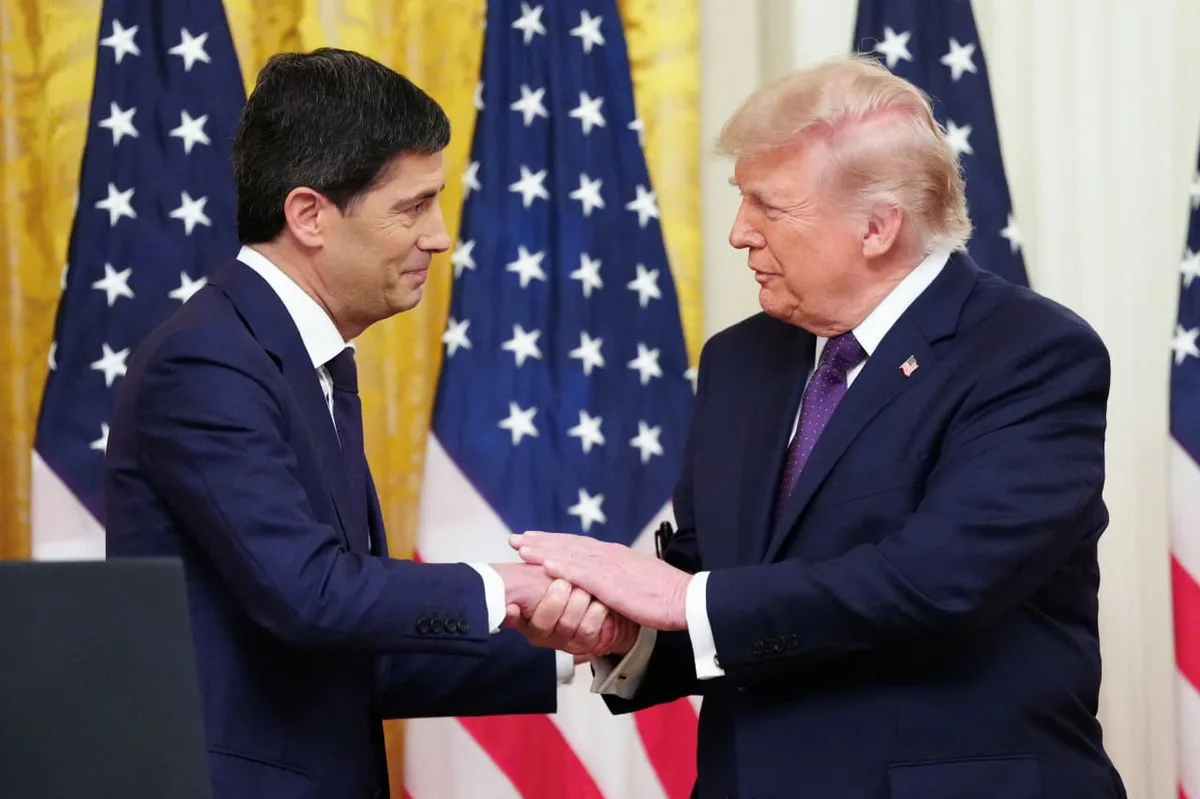
President Donald Trump sharpened his rhetorical assault on the Federal Reserve in a recent interview, describing the central bank as "hostile" — language that underscores a deepening tension between the White House and the institution charged with setting U.S. monetary policy. Such public pressure from a sitting president on the Fed is constitutionally fraught, given that the central bank's independence is considered a cornerstone of credible inflation-fighting policy.
When asked about Kevin Warsh — a former Fed governor widely viewed as a potential successor to Chair Jerome Powell — Trump offered a notably hands-off comment, saying Warsh "has to do what he has to do" on interest rates. The phrasing is ambiguous by design: it could be read as granting Warsh autonomy, or as a tacit signal that Trump expects rate cuts. Either way, it keeps market speculation about a Fed leadership transition alive and adds uncertainty to the rate-path outlook.
Read more Record Beef Prices Haven't Killed America's Steak Appetite →
Perhaps the most concrete and legally consequential element of Trump's remarks was his stated intention to remove Fed Governor Lisa Cook from the central bank's board. Cook, appointed by President Biden, would presumably contest any removal — and legal scholars have long debated whether a president has the authority to dismiss a Fed governor without cause. A court battle over that question could rattle bond markets and undermine confidence in the Fed's institutional independence at a sensitive moment for inflation expectations.
The broader pattern here is one of escalating executive pressure on an institution deliberately insulated from political cycles. Markets are watching closely: any perception that the Fed could be bent to White House preferences risks repricing inflation expectations upward, which would ironically push long-term interest rates higher — the opposite of what Trump appears to want. For investors and policymakers alike, the stability of Fed independence is not merely an abstract principle but a market-moving variable.
Continue reading at MarketWatch.com