State Fairs as Cultural Barometers: Unity Proves Elusive
America's state fairs draw crowds seeking shared tradition, but finding common ground remains complicated. A look at what these gatherings reveal.
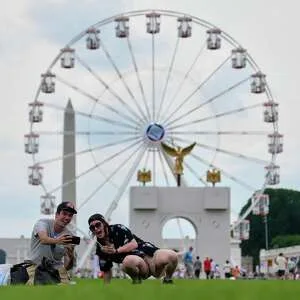
State fairs have long served as one of the few remaining public spaces where Americans of vastly different backgrounds converge under the same tent — drawn by fried food, livestock competitions, and novelty attractions that can include, apparently, a dinosaur's rib cage. Yet the atmosphere of communal celebration these events are designed to project can obscure deeper tensions that make genuine unity harder to manufacture than a corn dog on a stick.
The Great American State Fair, like its counterparts across the country, functions as a kind of seasonal ritual — a performative affirmation that shared culture still exists. Vendors, exhibitors, and fairgoers participate in choreographed Americana, and for a few days, the friction of national life seems to recede. But seasoned observers of these gatherings note that proximity is not the same as cohesion. People can stand in the same line for funnel cake without sharing a single value or aspiration.
Read more Western Populations Set to Shrink by 2029, Moody's Warns →
What makes the state fair a compelling lens for examining American identity is precisely its contradictions. It is simultaneously populist and commercial, nostalgic and forward-looking, local and nationally branded. The dinosaur rib cage — whatever its precise context in the fair's exhibit halls — captures this tension neatly: a prehistoric relic repurposed as entertainment, drawing wonder from a crowd that might agree on very little else. Spectacle, in this reading, becomes a substitute for substance.
Analysts who study civic life have increasingly pointed to the erosion of shared physical spaces — the town square, the union hall, the church — as a driver of social fragmentation. The state fair endures partly because it fills that void, offering a low-stakes environment where encounter is possible even if dialogue is not. Whether that counts as unity is a question the fairgrounds themselves cannot answer.
Continue reading at beaumontenterprise (gary fields)