Trump Accounts: The ETFs Powering New Child Savings Plans
New federally backed child investment accounts are taking shape, with specific ETFs expected to anchor the savings vehicles for long-term growth.

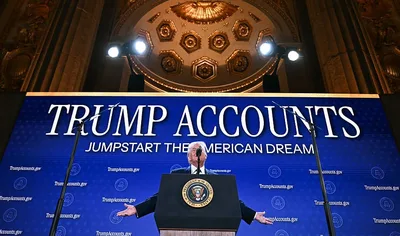
The Trump administration's newly unveiled child investment accounts — informally dubbed "Trump Accounts" — are moving from policy proposal to practical reality, and the investment community is already zeroing in on which exchange-traded funds will serve as their core building blocks. The accounts represent a notable federal initiative aimed at seeding long-term wealth-building for American children from an early age.
According to Yahoo Finance Senior Reporter Jennifer Schonberger, a handful of key ETFs are expected to play a central role in how these accounts are structured and invested. While the accounts are designed with a long time horizon in mind, the choice of underlying funds will have significant implications for how much wealth young account holders ultimately accumulate by adulthood — making the ETF selection far more than a bureaucratic footnote.
Read more Trump Accounts for Kids: Treasury Clarifies Eligible Index Funds →
From an analytical standpoint, the architecture of these accounts matters enormously. ETFs tied to broad market indexes tend to carry lower expense ratios and offer diversified exposure, which compounds favorably over the decades-long runway these child accounts are designed to exploit. If the selected funds mirror broad equity benchmarks, even modest initial contributions could grow substantially by the time beneficiaries reach adulthood — a dynamic that underscores why the ETF selection is a meaningful policy and financial decision, not merely a technicality.
The initiative also arrives at a moment of renewed national conversation about generational wealth gaps and whether government-seeded investment accounts can serve as a meaningful equalizer. Programs of this kind have long been debated in policy circles, and the Trump administration's move to implement them adds a new dimension to that debate — one that financial advisors and families alike will need to closely evaluate as details continue to emerge.
Continue reading at Yahoo Finance.