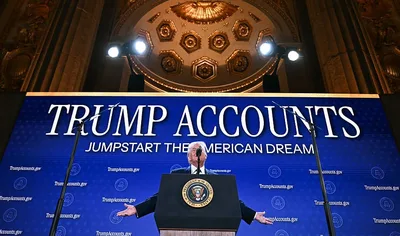
Trump Accounts for Kids: Treasury Clarifies Eligible Index Funds
The Treasury Department has specified which low-cost index funds qualify for children's 'Trump accounts,' giving parents clearer investment guidance.

The federal government's newly introduced children's savings initiative — informally dubbed 'Trump accounts' — has taken a meaningful step toward practical implementation. The Treasury Department has issued guidance clarifying precisely which low-cost index funds are eligible vehicles for the money deposited into these accounts, resolving one of the most pressing questions parents and financial advisors had been asking since the program was announced.
The accounts are structured around a mandate that invested funds flow into low-cost index funds rather than actively managed products, a design philosophy that aligns with decades of academic research showing that passive investing tends to outperform active stock-picking over long time horizons, particularly when fees are factored in. By restricting eligible investments to index funds, the program appears designed to protect young beneficiaries from high-cost financial products that can quietly erode compounding gains over years or even decades.
Read more Trump Accounts: The ETFs Powering New Child Savings Plans →
For families navigating the program, the Treasury's answer matters enormously in practical terms. Knowing which specific funds qualify removes ambiguity for parents who want to act but were waiting for regulatory clarity before committing funds. It also shapes how financial institutions will build and market account-compatible products going forward, potentially influencing which fund families see inflows tied to the initiative.
The broader policy question — whether government-seeded children's investment accounts can meaningfully close wealth gaps or build a savings culture among younger generations — remains open. But the clarification on eligible funds is a critical operational detail that moves the program from concept to something families can actually use. The effectiveness of such accounts will ultimately depend on participation rates, contribution levels, and whether the designated index funds deliver competitive long-term returns.
Continue reading at MarketWatch.com