FSEC ETF Shows 4.2:1 Risk-Reward Setup Across Strategies
Fidelity's investment-grade securitized ETF presents a rare risk-reward ratio with three distinct AI-generated trading approaches.
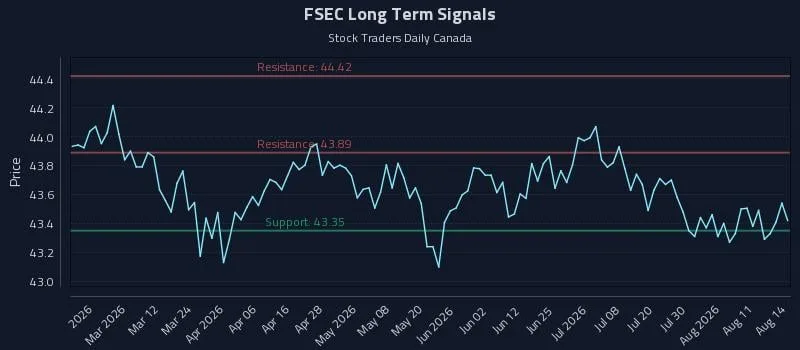
Fidelity Investment Grade Securitized ETF (NASDAQ: FSEC) is drawing attention from quantitative analysts for what technicians are calling an exceptionally favorable setup: a 4.2-to-1 risk-reward ratio that targets a 1.2% gain while risking only 0.3% on the downside. In a market environment where precise entry and exit discipline separates consistent performers from the field, that kind of asymmetry is worth examining closely.
Sentiment across all measured time horizons for FSEC currently reads as neutral — neither overbought nor oversold — which paradoxically creates the conditions that make structured strategies more viable. When an asset sits in neutral territory, it becomes more responsive to disciplined, rules-based entries rather than reactive momentum chasing, giving traders a cleaner canvas on which to execute.
Read more MSCI Lags Peers in Q2 as Morningstar and Moody's Shine →
Three AI-generated macro strategies have been identified for the ETF. The first is a Position Trading Strategy oriented to the long side, suited for investors comfortable holding through near-term noise in pursuit of the projected gain target. The second is a Momentum Breakout Strategy, which looks for a confirming surge in price action before committing capital — a more conservative entry that trades some upside for higher-probability confirmation. The third is a Risk Hedging Strategy biased short, designed for portfolio managers who may already carry long exposure to investment-grade fixed income and want a tactical offset.
The presence of all three strategies simultaneously underscores a broader analytical point: no single directional thesis dominates FSEC at this moment. Instead, the ETF appears to sit at a genuine decision node, where the appropriate trade depends almost entirely on an investor's existing book, time horizon, and risk tolerance. The AI framework doesn't resolve that ambiguity — it structures it, which is arguably more useful than a forced directional call in an uncertain macro backdrop.
Continue reading at Stock Traders Daily