US-Iran Fighting Rattles Markets as Oil Tops $90 on Sept. 1
Renewed US strikes on Iran sent crude above $90, drove Treasury yields toward 4.80%, and pulled Nasdaq sharply lower on the first trading day of September.
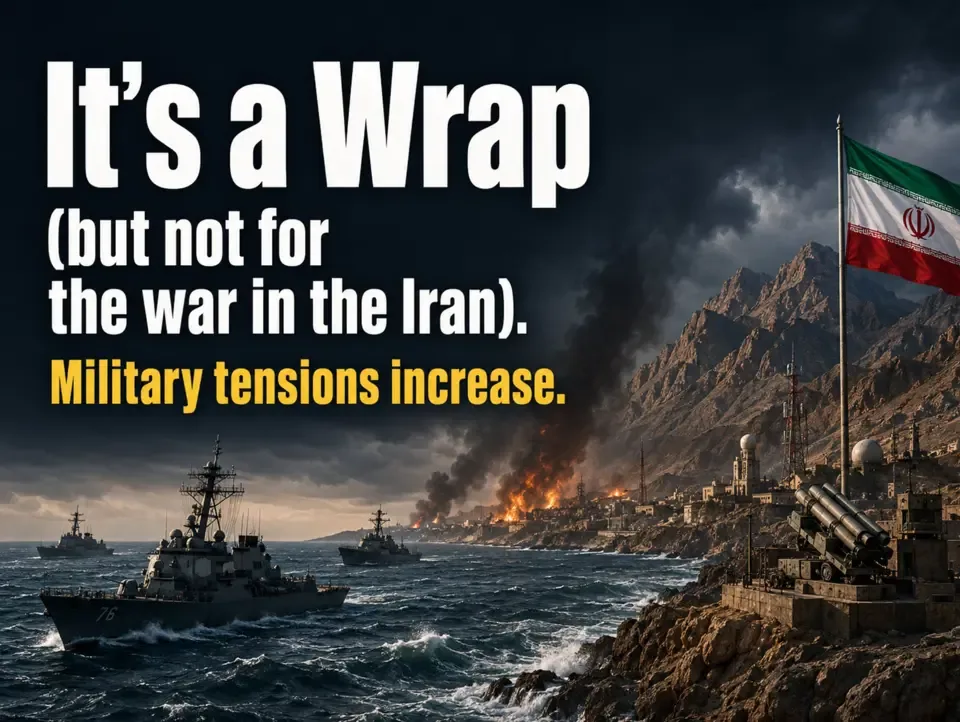
The opening session of September delivered an immediate jolt to financial markets as US-Iran hostilities resumed, forcing traders to reprice risk across nearly every major asset class. President Trump confirmed US military strikes on Iran after reports emerged of Iranian attacks on American forces and commercial vessels in the Strait of Hormuz, a chokepoint through which a significant share of global oil flows. His stark warning that Iran would be "totally wiped out as a country" amplified the uncertainty that investors most fear: an open-ended military confrontation in the world's most oil-sensitive region.
Crude oil surged past $90.50 per barrel, a move that intersected with a private inventory survey showing a larger-than-expected crude draw, compounding upward price pressure. That combination — geopolitical premium layered on tight supply signals — is precisely the environment that complicates the Federal Reserve's task. Fed Governor Barr underscored the difficulty, warning that if inflation does not moderate soon it will be "time for a hike," a hawkish signal that sent the 10-year Treasury yield climbing above 4.75% and pressing toward 4.80%.
Read more Jim Cramer's 10 Market Signals to Watch This Tuesday →
Equities absorbed the double blow of higher energy costs and rising yields. Nasdaq indices closed sharply lower, reflecting the particular sensitivity of growth and technology stocks to rate expectations. The dollar strengthened alongside yields, a classic risk-off configuration that signals broad investor anxiety rather than any single sector's distress.
On the economic data front, the day's releases offered little comfort. US construction spending for July came in at -0.5% against a flat expectation, JOLTS job openings at 7.271 million missed the 7.300 million estimate, and the ISM manufacturing PMI printed at 54.6 versus the 55.2 forecast. The S&P Global manufacturing PMI final for August, however, edged up to 53.9 from a 53.2 preliminary reading — a modest bright spot in an otherwise sobering picture. ECB's Nagel sought to reassure that the global economy remains on a growth trajectory despite Middle East turbulence, but markets clearly judged the geopolitical risk as the dominant variable for now.
Continue reading at Forexlive.