SK Hynix Surges 13% on Nasdaq Debut Amid AI Chip Demand
SK Hynix made a strong Nasdaq entrance, jumping 13% as its chairman cited enormous demand driven by AI giants like Nvidia and Apple.
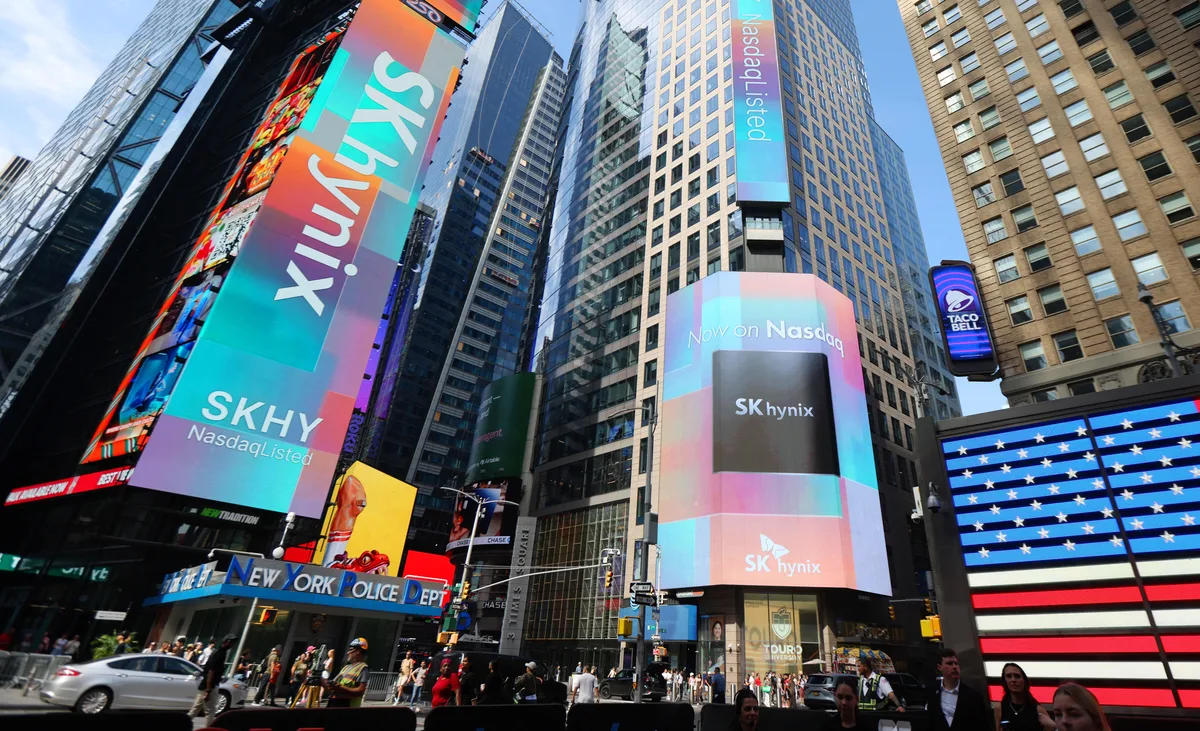
SK Hynix, the South Korean memory chip giant, made a striking debut on the Nasdaq exchange, with shares climbing 13% as investors responded enthusiastically to a company that has quietly become one of the most consequential suppliers in the global artificial intelligence supply chain. The listing marks a significant milestone for a firm that has grown into a trillion-dollar market cap business largely by serving the world's most powerful technology companies.
Speaking to CNBC around the time of the debut, SK Hynix's chairman offered a notably bullish assessment of the company's near-term prospects, stating simply that demand is "enormous." That confidence is grounded in the company's deep commercial relationships with semiconductor powerhouses like Nvidia and consumer electronics titan Apple — two customers whose own explosive growth in AI hardware and premium devices has created an insatiable appetite for high-bandwidth memory and advanced NAND storage.
Read more Meta Stock Posts Best Weekly Gain in Years on AI Strategy →
The debut timing is telling. Memory chips have historically been a cyclical, boom-and-bust business, but the AI infrastructure buildout appears to be reshaping that narrative. SK Hynix has been among the primary beneficiaries of surging orders for high-bandwidth memory, or HBM — the specialized stacked chips that sit alongside Nvidia's graphics processors and enable the massive data throughput that large language models require. That positioning has transformed the company from a commodity supplier into a critical enabler of the AI era.
Reaching a trillion-dollar valuation places SK Hynix in rarefied company, underscoring how dramatically the semiconductor sector's center of gravity has shifted toward AI-adjacent players. For investors, the Nasdaq listing increases accessibility to a stock previously traded primarily on the Korea Exchange, potentially broadening the shareholder base at a moment when sentiment around AI infrastructure remains broadly constructive. Whether the 13% first-day pop reflects genuine long-term repricing or near-term enthusiasm will depend heavily on how sustained the AI capex cycle proves to be.
Continue reading at US Top News and Analysis