Oil Ticks Higher as Strait of Hormuz Closure Weighs on Markets
US-Iran tensions keep crude prices elevated while European equities and US futures drift in a subdued end-of-week session.
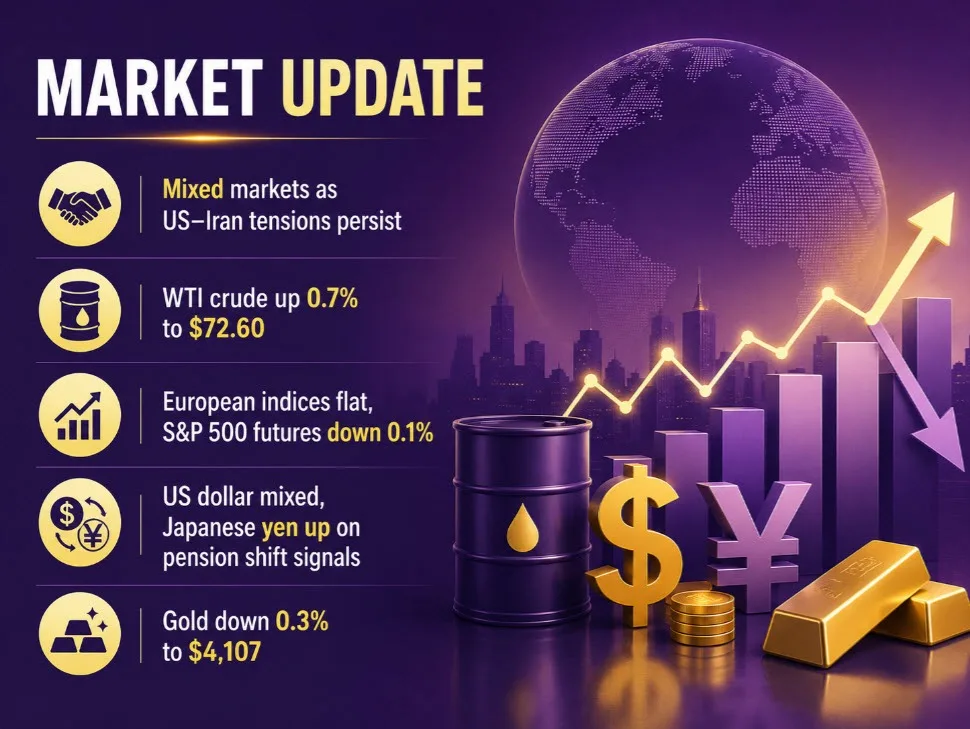
Oil markets are holding a cautious bid as the Strait of Hormuz remains in effective closure, a development that continues to shadow global energy supply chains. WTI crude edged up 0.7% to $72.60 on Friday, a modest but telling move given that the IEA has flagged global oil supply running nearly 9.4 million barrels per day behind pre-war levels even after some Hormuz flows resumed in June. The incremental rise in crude prices signals that traders are still pricing in meaningful geopolitical risk rather than treating the situation as resolved.
A brief flash of optimism emerged earlier in the session when a US official suggested that negotiations between Washington and Tehran could still materialize, but that headline faded quickly. Markets appear to be distinguishing between diplomatic noise and physical reality — and the physical reality is a strait that controls a critical share of global oil exports sitting effectively closed. Iran's leverage over that chokepoint appears to be an increasingly durable feature of the current environment, not a transient scare.
Read more Meta Stock Posts Best Weekly Gain in Years on AI Strategy →
Beyond energy, the broader market picture was notably subdued. European equities closed little changed, while S&P 500 futures slipped 0.1% and Nasdaq futures fell 0.3%, with tech shares giving back modest gains. The dollar was broadly flat, with EUR/USD anchored at 1.1430 and GBP/USD barely budging. The yen was the standout mover, with USD/JPY falling 0.3% to 161.80 after Japan signaled a significant pension portfolio reallocation — a reminder that domestic institutional flows can cut through geopolitical noise. The Bank of Japan is separately expected to hold rates steady at its July meeting while maintaining its tightening guidance.
On the inflation front, German headline CPI was confirmed at 2.3% annually in June and French inflation also came in softer, mildly supportive for European Central Bank policymakers navigating their own rate path. With US earnings season beginning imminently and the June US CPI report due July 14, next week promises a sharper test of whether current equity valuations and rate expectations can hold under fresh data scrutiny.
Continue reading at Forexlive.