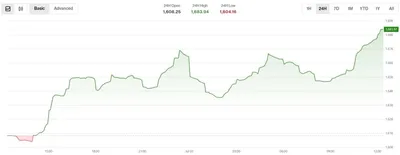
Oil Prices Edge Higher on Short-Covering Before US Holiday
Crude oil prices ticked up as traders unwound short positions ahead of a US market holiday, a pattern typical of low-liquidity sessions.

Oil markets posted modest gains in a session defined less by fundamental conviction than by tactical positioning. Traders engaged in short-covering — buying back previously sold contracts to close out bearish bets — ahead of a US public holiday that would thin market participation and reduce liquidity. This kind of price movement, while real, often carries limited informational value about where the market believes oil is truly headed.
Short-covering rallies are a well-understood phenomenon in commodity markets. When traders who hold short positions anticipate reduced liquidity, they frequently choose to exit those bets rather than risk being caught in an illiquid market where price swings can be amplified. The result is a temporary upward nudge in prices that reflects risk management rather than any shift in supply-and-demand expectations.
Read more Securitize Eyes SPAC IPO to Advance Asset Tokenization →
The timing matters for interpreting the signal. Gains driven by pre-holiday positioning tend to reverse once normal trading volumes resume, making it important for investors and analysts not to read too deeply into the directional move. Broader crude market dynamics — including OPEC+ production decisions, global demand forecasts, and US inventory levels — remain the dominant drivers over any sustained timeframe.
For longer-term market watchers, the episode serves as a useful reminder that short-term price action in oil is frequently shaped by calendar effects and positioning mechanics as much as by geopolitical or macroeconomic developments. Parsing the two is essential to forming a clear view of where energy markets actually stand.
Continue reading at Reuters