Nvidia's 70% Revenue Growth Forecast Eyes No. 2 Tech Spot
Nvidia projects 70% revenue growth, positioning it to surpass rivals and become the second-largest tech company by revenue.

Nvidia's latest earnings guidance is more than a quarterly milestone — it signals a structural reshaping of the technology industry's revenue hierarchy. With a 70% growth forecast on the table, the chipmaker appears poised to leapfrog several established giants and claim the position of second-largest tech company by revenue, a standing that would have seemed improbable just a few years ago when Nvidia was primarily known as a gaming graphics card maker.
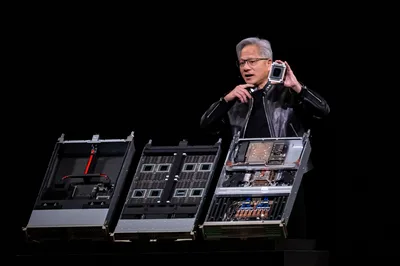
What makes the projection particularly striking is the caveat offered by CEO Jensen Huang during the earnings call. Rather than treating 70% as an aspirational ceiling, Huang framed it as a floor, telling investors that actual demand significantly exceeds even that ambitious figure. "Our demand is much greater than 70%," he said — a rare moment of a chief executive suggesting that reported guidance may understate underlying business momentum rather than overstate it.
Read more Options Market Points to S&P 500 Gains, With One Caveat →
The analytical context here matters. Nvidia's ascent is being driven almost entirely by insatiable enterprise and hyperscaler appetite for its AI accelerator chips, particularly the H100 and successor architectures. The company has effectively become the tollbooth of the artificial intelligence buildout, collecting revenue every time a cloud provider, startup, or sovereign government decides to scale up its AI infrastructure. That structural demand dynamic, more than any single product cycle, is what gives Huang's demand commentary credibility.
For the broader tech landscape, Nvidia's trajectory raises pointed questions about competitive positioning. Legacy software and hardware companies are watching a semiconductor firm rewrite the rules of technology revenue concentration at a speed that outpaces traditional product refresh cycles. If Nvidia sustains even a fraction of this growth rate, the competitive implications for rivals across chips, cloud, and enterprise software will be significant and lasting.
Continue reading at US Top News and Analysis.