Marvell vs. UiPath: Reading AI Revenue Trends for Investors
Comparing Marvell Technology and UiPath quarterly revenue trends reveals what AI momentum actually looks like beneath the headlines.
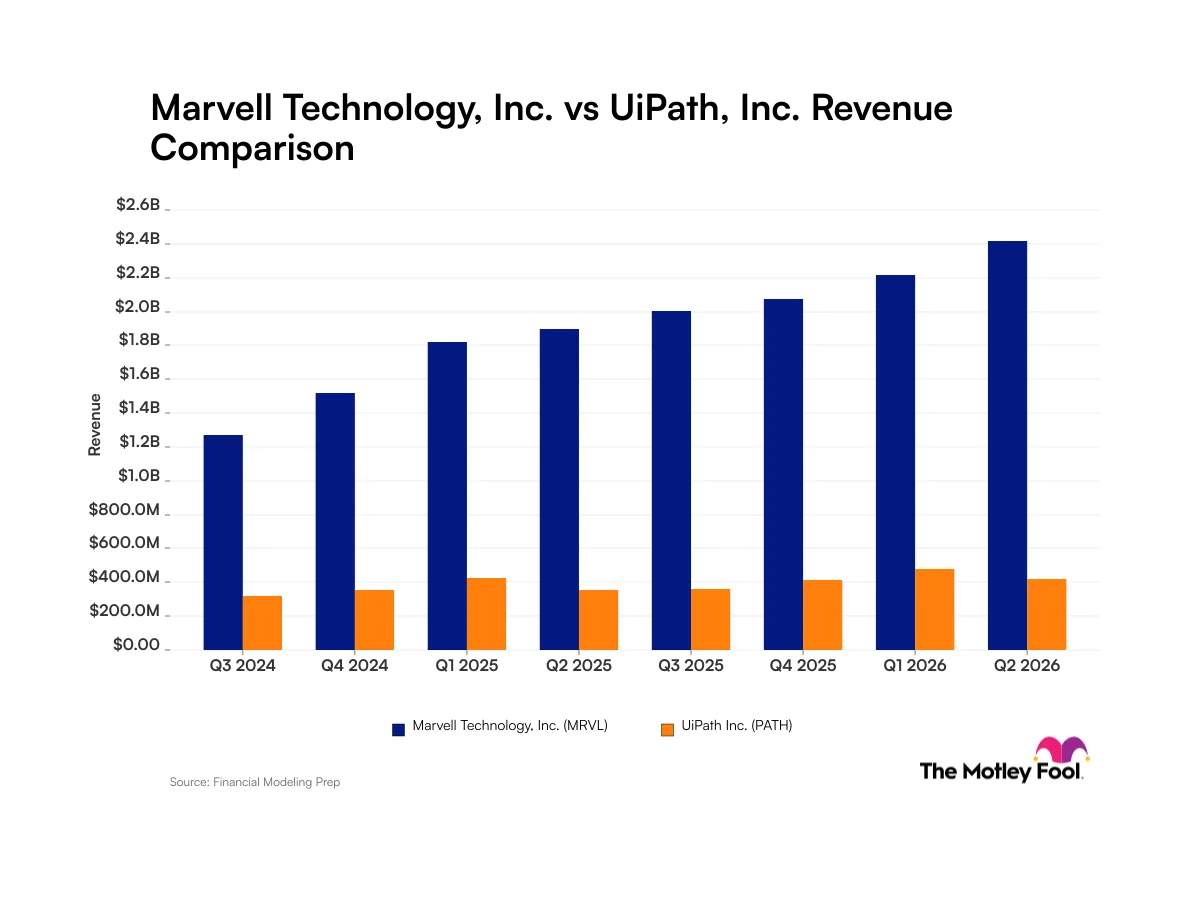
The artificial intelligence investment narrative has grown loud enough to obscure meaningful differences between companies that carry the AI label. Marvell Technology and UiPath represent two distinct expressions of the AI theme — one rooted in semiconductor infrastructure, the other in enterprise software automation — and their quarterly revenue trajectories offer investors a more grounded way to evaluate whether AI exposure translates into durable financial performance.
Marvell has positioned itself as a critical supplier of custom silicon and networking chips that power the data center buildout underpinning generative AI workloads. That hardware-level exposure tends to produce revenue that moves in closer lockstep with capital expenditure cycles at hyperscale cloud providers, making the company's quarterly results a useful barometer for how aggressively the largest technology platforms are continuing to invest in AI infrastructure.
Read more Fed Rate Decision and Tech Earnings headline a pivotal week →
UiPath, by contrast, sells robotic process automation software that enterprises deploy to streamline repetitive workflows. The company has increasingly framed its platform around AI-augmented automation, but its revenue dynamics are shaped more by enterprise software buying cycles, seat-based licensing, and customer expansion rates than by the raw chip demand driving Marvell's growth story. That distinction matters when interpreting quarter-to-quarter fluctuations.
For investors trying to allocate within the AI theme, the contrast between these two companies illustrates a broader principle: not all AI revenue is created equal. Infrastructure plays like Marvell tend to benefit earliest and most directly when AI spending accelerates, while software automation companies like UiPath may see a longer adoption curve as enterprises gradually integrate AI tools into existing workflows and measure return on investment before expanding commitments.
Understanding where each company sits in the AI value chain — and how sensitive its revenue is to different demand drivers — is arguably more useful than the AI label alone. Continue reading at Yahoo Finance.