Marvell vs. UiPath: Reading AI Revenue Trends for Investors
Comparing Marvell Technology and UiPath reveals how different AI business models produce starkly different revenue trajectories.
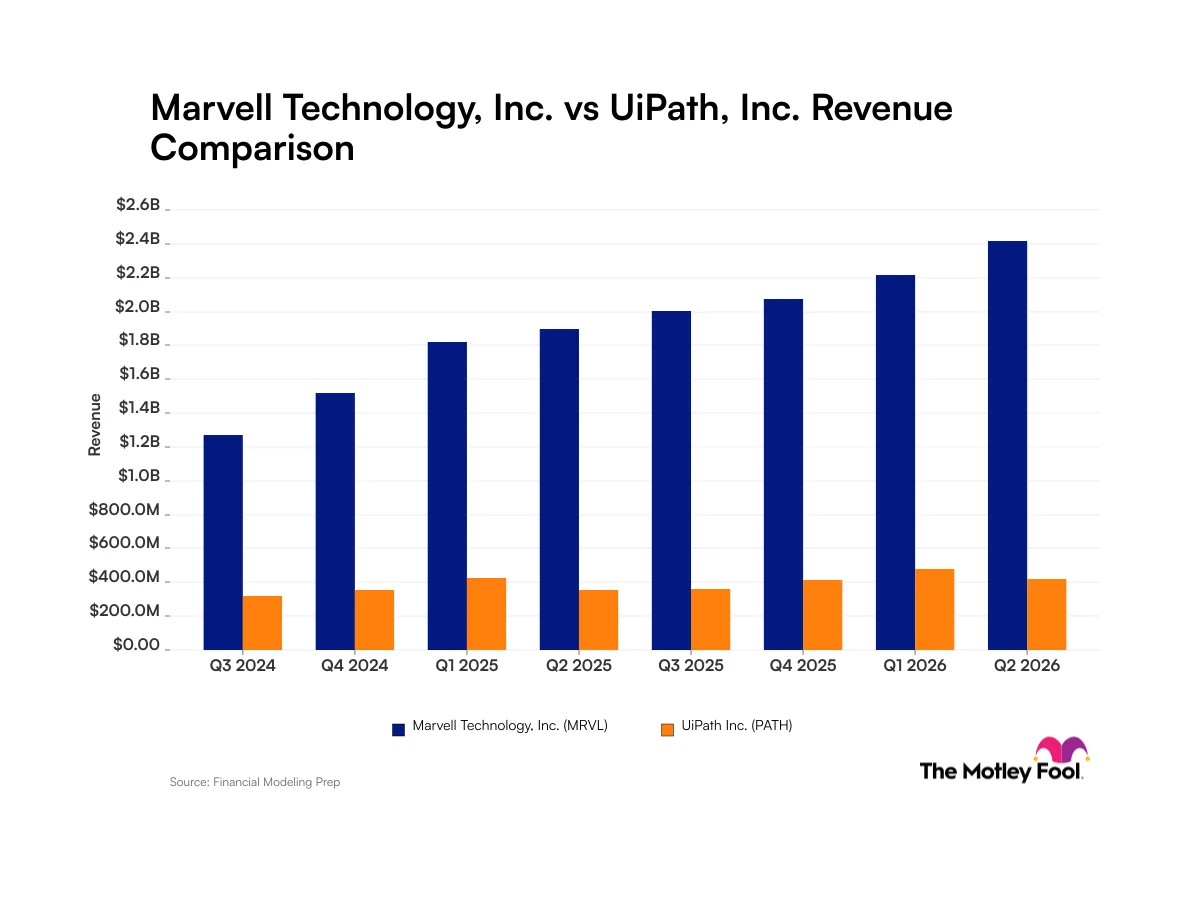
Artificial intelligence has become a catch-all label applied to companies with vastly different business models, growth profiles, and revenue structures. Marvell Technology and UiPath both carry the AI designation, yet the financial stories they tell each quarter diverge in ways that matter enormously to investors trying to separate durable growth from cyclical momentum.
Marvell sits closer to the hardware and semiconductor infrastructure layer of AI, supplying custom chips and networking solutions that data centers depend on as they scale capacity. This positioning tends to produce revenue that is lumpy but explosive when hyperscaler capital expenditure cycles accelerate — a dynamic that has defined much of the recent AI infrastructure buildout. The risk, of course, is that such cycles can reverse quickly, leaving chip suppliers exposed to inventory corrections.
Read more Fed Rate Decision and Tech Earnings headline a pivotal week →
UiPath, by contrast, operates in the software automation space, where it offers robotic process automation tools increasingly augmented by AI capabilities. Its revenue model leans on subscriptions and annual recurring contracts, which provide more predictability but also mean growth is paced by enterprise sales cycles rather than the raw urgency of data center expansion. In an environment where enterprise IT budgets remain under scrutiny, that steadiness can look like stagnation.
The contrast between the two companies illustrates a broader tension in AI investing: infrastructure plays can deliver faster top-line acceleration in boom periods, while software platforms offer compounding, sticky revenue that holds up better in downturns. Neither model is inherently superior — the right lens depends on where an investor believes the AI adoption curve currently sits and how much volatility they can tolerate. Analysts watching quarterly revenue trends for both firms would do well to examine not just growth rates but the quality and durability of each revenue stream before drawing conclusions about long-term positioning.
Continue reading at Yahoo Finance.