Macron and Modi Court Big Tech in Global AI Infrastructure Race
France and India are aggressively wooing major AI firms to attract data center investment and cloud infrastructure deals.
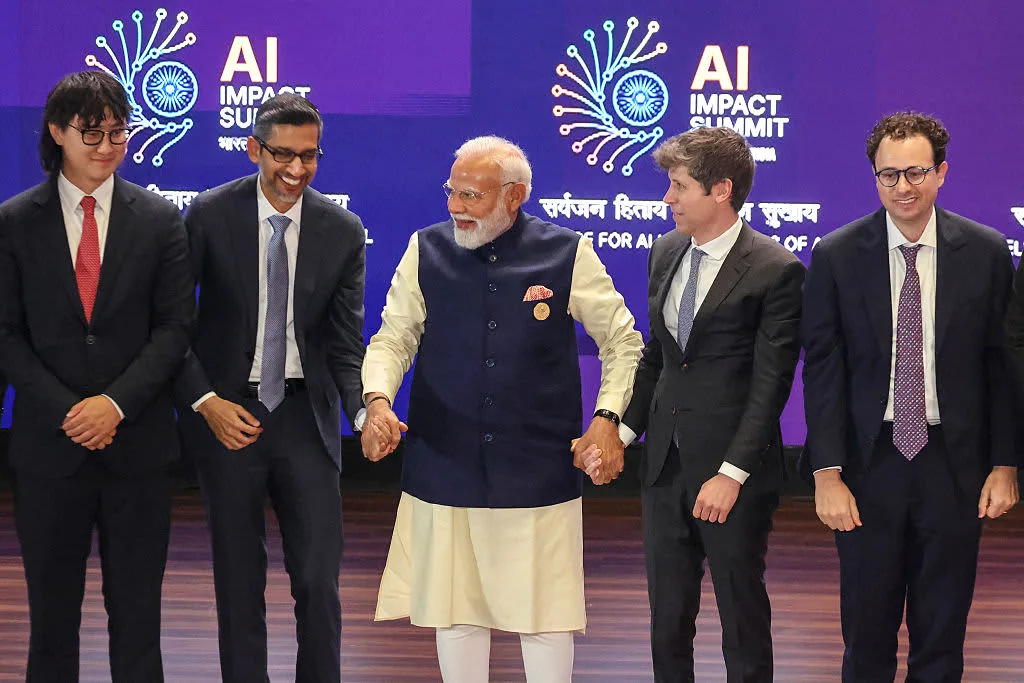
A new diplomatic playbook is emerging across the world's capitals: roll out the red carpet for artificial intelligence giants. Leaders from French President Emmanuel Macron to Indian Prime Minister Narendra Modi are personally courting technology executives, signaling that AI infrastructure has become a core pillar of national economic strategy rather than a niche tech-policy concern.
The competition centers on data centers and cloud infrastructure — the physical backbone that makes large-scale AI possible. Governments now understand that whoever hosts these facilities gains not just jobs and tax revenue, but strategic leverage in the global technology order. For France, attracting AI investment reinforces its ambition to position Europe as a credible counterweight to American and Chinese tech dominance. For India, the calculus blends economic development with a desire to leapfrog older industrial stages entirely.
Read more Philadelphia Buries Time Capsule for America's 250th Birthday →
What makes this moment distinctive is the degree to which heads of state are personally involved. Rather than delegating outreach to trade ministries or investment agencies, leaders like Macron and Modi are meeting directly with tech CEOs — a posture that reflects both the scale of capital these companies can deploy and the geopolitical weight AI now carries. A single hyperscale data center commitment can represent billions of dollars in investment and reshape a country's digital trajectory for a decade.
The broader pattern suggests a structural shift in how nations compete for economic relevance in the AI era. Traditional incentives — tax breaks, regulatory flexibility, land grants — are being bundled with something more intangible: the promise of political access and national priority status. For AI firms evaluating where to expand, that combination can prove decisive, particularly in markets where regulatory environments are still being written.
As this courtship intensifies, analysts will be watching whether these partnerships translate into genuine technology transfer and local workforce development, or whether they primarily enrich global firms while leaving host nations dependent on foreign-controlled infrastructure. Continue reading at US Top News and Analysis.