Lindsey Graham's Death Leaves GOP Senate Agenda in Flux
The sudden death of Sen. Lindsey Graham at 71 creates immediate complications for Republican legislative priorities in Congress.
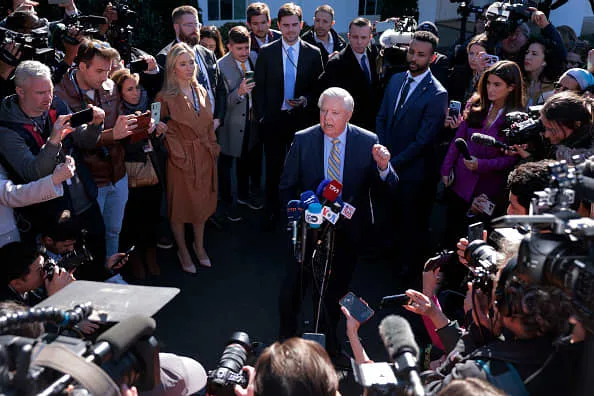
The unexpected death of South Carolina Republican Sen. Lindsey Graham at age 71 has sent ripples through the upper chamber at a moment when the GOP can ill afford disruptions. Graham was a fixture of Senate deal-making for decades, and his absence creates both a symbolic and procedural vacuum that Republican leadership will need to navigate carefully.
With Senate Republicans already operating on thin margins, the loss of a seasoned legislator of Graham's stature complicates the math on a range of pending priorities. His institutional knowledge, committee positioning, and cross-aisle relationships represented assets that cannot be easily redistributed among remaining members — particularly at a time when cohesion is essential to advancing the party's agenda.
Read more Lindsey Graham's Death Leaves GOP Senate Agenda in Flux →
South Carolina's governor will now face the task of appointing a successor, a process that itself introduces political uncertainty. Even a same-party replacement would arrive without Graham's seniority, committee assignments, or the credibility that comes from years of high-profile legislative engagement. That transition period — however brief — could slow momentum on critical votes.
The broader implication is one familiar to any analyst of the Senate's fragile dynamics: individual senators matter enormously, and the chamber is particularly sensitive to unexpected departures. Graham's role as a prominent voice on foreign policy, judicial nominations, and budget negotiations leaves gaps across multiple lanes of Republican strategy simultaneously.
For a party attempting to consolidate power and advance an ambitious legislative agenda, Graham's death is a sobering reminder of how quickly circumstances can shift in a body where every vote counts. Continue reading at US Top News and Analysis.