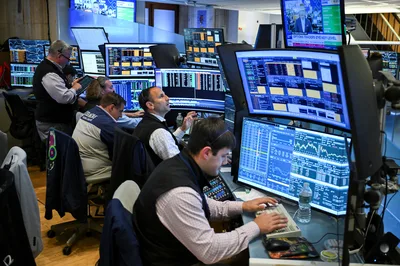
Google and Tesla Shed $500B in Value as AI Cost Fears Mount
A dramatic market rotation this week punished Big Tech while rewarding suppliers, raising hard questions about who bears AI's enormous costs.

Wall Street has spent much of the past year treating artificial intelligence as an unambiguous growth story, bidding up the companies most visibly associated with the technology. This week, that consensus cracked. Google and Tesla together shed roughly half a trillion dollars in market capitalization, a staggering single-week destruction of shareholder value that signaled a meaningful shift in how investors are reading the AI trade.
The rotation was not random. As Google and Tesla fell, their suppliers — the component makers, chip fabricators, and infrastructure vendors that quietly enable the AI buildout — logged gains. That divergence carries an implicit message from the market: the companies absorbing the capital expenditure burden of AI may be less well-positioned than those collecting payment for it. In economic terms, the question is who captures the value in a supply chain, and this week investors began voting with real money.
Read more Dow Futures Flash Sell Signal Amid Apple Earnings and Fed Watch →
The dynamic reflects a broader anxiety that has been building beneath the surface of the AI rally. Hyperscalers and platform companies have been spending aggressively on data centers, custom silicon, and energy infrastructure — costs that are concrete and immediate, while the revenue upside remains speculative and longer-dated. When growth expectations are priced to perfection, any wobble in that narrative can produce outsized selloffs.
For Tesla, the calculus involves an additional layer of complexity. The company sits at the intersection of AI ambition and automotive execution, and investor patience with that dual identity appears to be thinning. For Google, the pressure is more structural: sustaining both its core advertising business and a costly AI transformation simultaneously is a difficult financial balancing act that markets are scrutinizing with renewed skepticism.
Whether this week marks a genuine inflection point or a temporary reset remains to be seen, but the supplier-versus-platform split is a framework investors are likely to keep applying. Continue reading at Yahoo.