China's Humanoid Robot Boom Faces Its First Market Test
Unitree's IPO will reveal whether investors believe humanoid robots can generate real returns amid geopolitical uncertainty.
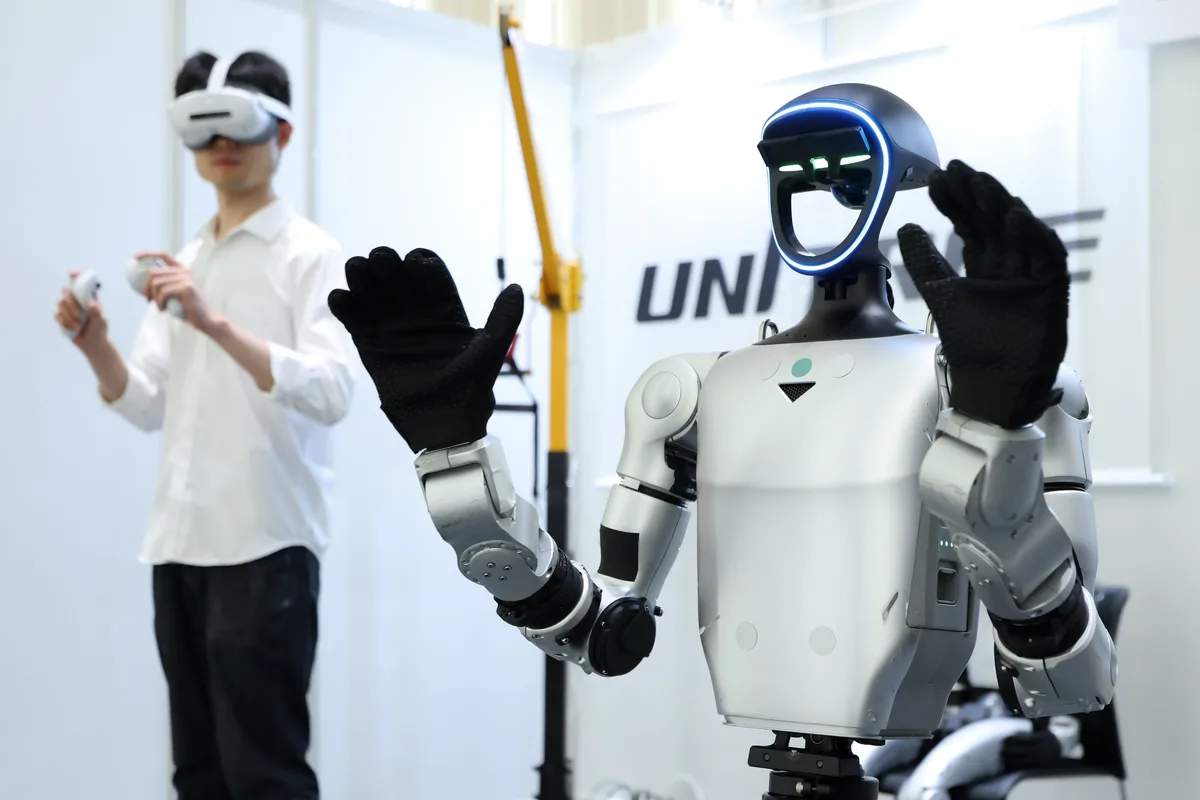
China's robotics industry has become extraordinarily adept at engineering spectacle. Machines that execute backflips and navigate obstacle courses have captivated global audiences, positioning Chinese manufacturers like Unitree as serious contenders in what many analysts consider the next major technological frontier. But dazzling demonstrations and durable business models are two very different things — and an impending public offering from Unitree will force the market to weigh in on which side of that divide the company falls.
The planned IPO arrives at a moment of genuine ambiguity for the humanoid robotics sector. Despite years of investment and engineering progress, no major player has yet proven that these machines can generate sustainable revenue at scale. The gap between a robot that can perform a choreographed gymnastics routine and one that can reliably complete repetitive industrial tasks — cost-effectively, without constant maintenance — remains significant. Unitree's offering essentially asks investors to bet that this gap will close, and close soon enough to justify current valuations.
Read more Markets Look Calm, But the FOMO Rally Has a Hidden Risk →
Geopolitical headwinds add another layer of complexity to that calculation. Intensifying tensions between Washington and Beijing have made Western institutional investors increasingly cautious about Chinese technology companies, particularly those operating in sectors with potential defense or dual-use applications. Humanoid robotics occupies uncomfortable strategic territory, which could suppress demand from U.S. and European funds even if Unitree's underlying technology impresses on its merits.
The broader question Unitree's market debut raises is whether the Chinese robotics industry can translate state-backed momentum and engineering talent into the kind of disciplined commercial execution that public markets actually reward. Beijing has made robotics a national priority, channeling subsidies and policy support toward domestic champions. That backing provides a cushion — but it does not automatically produce customers, recurring contracts, or the unit economics that justify a growth-stock premium. How investors price Unitree's shares will serve as a real-time referendum on those unknowns.
Continue reading at US Top News and Analysis.