Bitcoin's BIP-110 Debate Shows Market Forces at Work
A governance dispute over Bitcoin protocol proposals reveals how decentralized networks resolve competing interests without central authority.
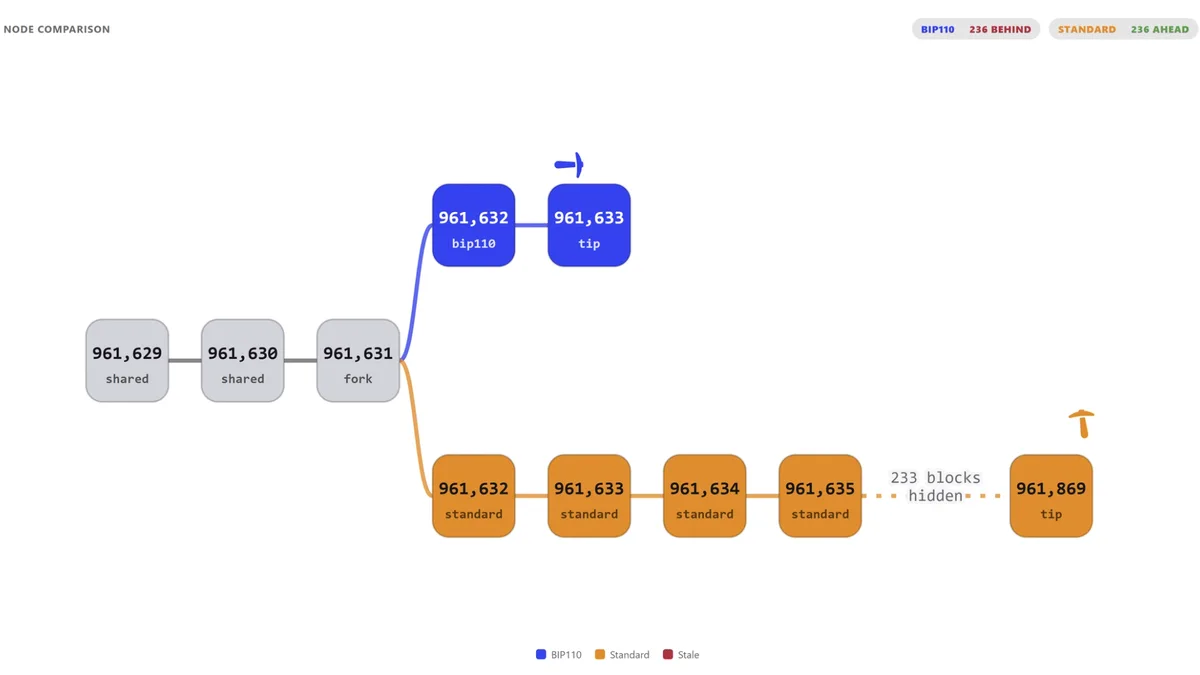
Bitcoin's recurring governance battles are often framed as technical disputes, but they are something more fundamental: real-time experiments in decentralized decision-making where no single authority can impose a winner. The episode surrounding BIP-110 illustrates how competing factions — miners, developers, node operators, and investors — negotiate protocol changes through economic signaling rather than top-down mandates, a process that mirrors market dynamics more than it resembles corporate governance.
In traditional software development, a product owner or executive team resolves disagreements about direction. Bitcoin has no such mechanism. Instead, proposals live or die based on whether enough participants find them worth adopting. That self-selection process, messy and slow as it is, functions as a kind of price discovery for protocol upgrades — surfacing what the network's economic majority actually values rather than what any one constituency prefers.
Read more Human-Computer Interaction Market Projected to Hit $1.97T by 2030 →
The broader implication is worth sitting with. Critics of Bitcoin's governance model often point to its inefficiency, and they are not wrong that consensus-based systems move slowly. But that friction is also a feature: it raises the cost of capture by any single interest group, whether that group is a large mining pool, a well-funded development team, or a vocal online community. The difficulty of changing the protocol is, paradoxically, a source of its credibility as a store of value.
What BIP-110 ultimately demonstrates is that open-source monetary networks operate under a form of institutional discipline that conventional organizations lack. Participants can exit, fork, or simply refuse to upgrade — each choice carrying real economic consequences. That accountability loop, enforced by market participants rather than regulators or boards, is as close to pure free-market capitalism as modern financial infrastructure gets. Whether the outcome is optimal is debatable; that the mechanism is genuinely decentralized is harder to dispute.
Continue reading at CoinDesk.